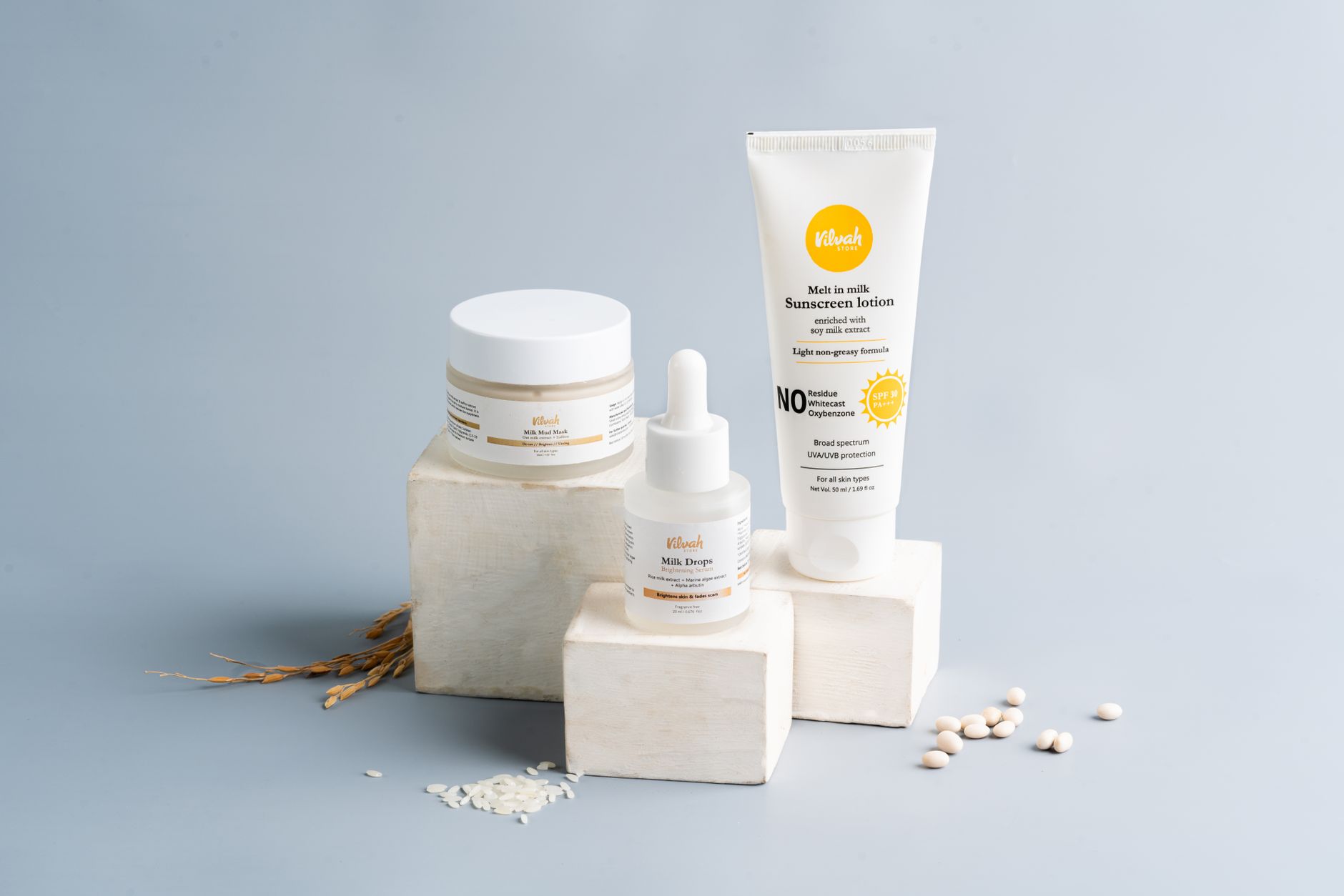
Korean Sunscreen Wholesale: What Resellers Must Know About Selling K-Beauty SPF in the US
Yes, you can resell Korean sunscreen in the US, but it must comply with FDA OTC drug regulations, including approved active ingredients and compliant English labeling. Not every Korean SPF product sold abroad qualifies for US resale. Verify compliance before purchasing inventory, start small to test the market, and confirm lot contents with your supplier.
an English Drug Facts label. Not every Korean SPF product sold abroad qualifies for US resale. Verify compliance before purchasing inventory, start small to test the market, and confirm lot contents with your supplier. At Remex Liquidation, we recommend this exact approach with our mixed Korean cosmetics lots, since confirming contents in advance helps you avoid compliance surprises before listing products for resale.
Why Korean Sunscreen Is Regulated as an OTC Drug in the US
The FDA classifies sunscreen as an over-the-counter drug, not a cosmetic. This distinction has roots in a regulatory framework dating back decades, long before K-beauty entered the US mainstream. Because sunscreen makes a drug claim (altering a body function by blocking UV radiation), it falls under the OTC drug monograph system rather than cosmetic law. The practical consequence for resellers is significant: you are not just sourcing a beauty product. You are sourcing a regulated drug product that must meet specific ingredient, labeling, and testing standards before it can be legally marketed as sunscreen in the US. Skin cancer is the most common cancer in the United States, with over 5 million cases diagnosed annually (pmc.ncbi.nlm.nih.gov), and the FDA's strict stance on sunscreen reflects that public health weight. Daily sunscreen use reduces the risk of developing melanoma by 50% (pmc.ncbi.nlm.nih.gov). That context explains why the FDA has been reluctant to fast-track approval of new filters without substantial safety data.
The FDA's sunscreen monograph currently recognizes 16 UV filters approved for use in the US (accessdata.fda.gov). The FDA received over 15,000 public comments on its 2021 sunscreen proposed order, illustrating how contested and complex the regulatory process around sunscreen remains (fda.gov). Rules change. Always verify the current approved filter list directly at fda.gov before purchasing inventory for resale.
Which Korean Sunscreen Filters Are Not FDA-Approved?
This is where most Korean SPF products run into trouble in the US market. Popular Korean sunscreen filters including Tinosorb M (bisoctrizole), Tinosorb S (bemotrizinol), Mexoryl SX, Mexoryl XL, and Uvinul A Plus are widely used in Korean formulations for good scientific reasons. UVA comprises about 95% of terrestrial radiation (pmc.ncbi.nlm.nih.gov), and these newer filters offer superior broad-spectrum UVA protection compared to some older approved options. The problem is not safety. The problem is that these filters have not completed the FDA's lengthy approval process. Products using them cannot legally be marketed or sold as sunscreen in the US regardless of their scientific merit or their legal status in Korea, the EU, or Japan.
Products using only FDA-approved filters (zinc oxide, titanium dioxide, avobenzone, homosalate, octinoxate, octisalate, octocrylene, and others on the current monograph) may qualify for US sale if all label and dosage requirements are also met. In our experience, verifying the filter list with suppliers before purchasing wholesale inventory prevents costly inventory mistakes and ensures the products you receive can actually be marketed as sunscreen in the US. The absence of a non-approved filter does not guarantee full compliance, but its presence guarantees non-compliance for sunscreen marketing purposes. Confirm the current approved list at fda.gov before each inventory purchase.
What OTC Drug Status Means for a Reseller Practically
You are not the manufacturer. You did not formulate the product. But under FDA enforcement reality, you are still responsible for ensuring products you sell carry compliant labeling and use approved ingredients. Reselling a Korean sunscreen with a non-approved filter or a non-compliant label exposes you to the same import detention and enforcement risk as the importer of record. Failure to comply can result in import detentions, warning letters, or product seizures by FDA or Customs and Border Protection.
One misconception worth addressing directly: personal importation exemptions do not provide a reliable resale exemption. The FDA's personal importation policy is a narrow enforcement discretion tool that covers individuals bringing small quantities of unapproved drugs for personal use. It was never designed to cover commercial resale. If you are purchasing wholesale quantities with intent to resell, you are operating in commercial territory and the full OTC drug rules apply. Do not rely on personal importation logic to justify listing non-compliant sunscreen products for sale.
A genuine product bought in Korea is also not automatically legal to resell in the United States. Authenticity is a necessary condition, not a sufficient one. Authenticity and regulatory compliance are separate questions.
How to Source Korean Sunscreen Wholesale Legally and Practically
The K-beauty wholesale market is growing fast. Korea exported a record $11.4 billion in cosmetics in 2025, second only to France (koreaimporthub.com), and the US became the largest single market at $2.2 billion (koreaimporthub.com). Korean cosmetics exports reached $11.1 billion in just January through September 2026, up 31.1% year over year (koreaimporthub.com). That growth means more suppliers, more options, and also more risk of sourcing from channels that have not done the compliance work. As of July 24, 2026, Korean-origin cosmetics pay a 12.5% total US duty and the de minimis exemption has been eliminated, so every parcel requires a customs entry (koreaimporthub.com). Factor that into your landed cost calculations.
Four primary sourcing channels exist for US-based resellers: brand wholesale programs, authorized US distributors, mixed liquidation lots, and direct import from Korea. Each has a different risk and cost profile for SPF compliance. The table below summarizes the key trade-offs.
| Sourcing Channel | Typical MOQ | Cost Per Unit | US Compliance Handled? | Variety | Best For |
|---|---|---|---|---|---|
| Brand Wholesale Program | 1,000+ units | Moderate | Yes (brand manages) | Low (single brand) | Established retailers with strong cash flow |
| Authorized US Distributor | 50-500 units | Moderate-High | Yes (distributor manages) | Medium | Sellers who want pre-verified compliant SKUs |
| Mixed K-Beauty Liquidation Lot (e.g., Remex Liquidation) | 1 box (400+ units) | ~$1.50/piece | Buyer verifies per item | High (multi-brand, multi-SKU) | TikTok Shop, Whatnot live sellers, small stores testing K-beauty |
| Direct Import from Korea | Varies (often high) | Low | No (importer is responsible) | High | Large importers with regulatory resources |
| General Liquidation Marketplaces | 1 lot | Varies | No | Variable | Buyers comfortable with unsorted, unverified inventory |
Korean Sunscreen Wholesale Sourcing Options for US Resellers
Where Small Sellers and Live Sellers Fit in the Sourcing Landscape
Traditional Korean brand wholesale programs are generally out of reach for solo sellers and small shops. High MOQs, retailer credentialing requirements, and sometimes exclusive territory agreements create real barriers. Authorized US distributors can be a middle path, but they often carry limited SKU variety and add a margin layer that compresses resale profit. As of November 2026, 150 Korean beauty wholesaler companies have been identified operating in the United States (revenuebase.ai), which means competition for good accounts is real and access is not guaranteed for new sellers.
Mixed K-beauty lots from liquidation suppliers give small sellers access to authentic, brand-name product at a low cost per piece, with minimal starting commitments. For TikTok Shop and Whatnot live sellers, variety and low cost per unit matter more than single-SKU depth. Live selling audiences respond to the unboxing and discovery experience that a diverse mixed lot naturally creates. This is where a supplier like Remex Liquidation fits into the picture.
What a Remex Liquidation Mixed Korean Cosmetics Box Includes
At Remex Liquidation, we source authentic Korean beauty wholesale for exactly this kind of seller. Our Mixed Korean Cosmetics Small Lot contains 400+ units per box, priced at $600 per box for domestic buyers (approximately $1.50 per piece) and $800 per box for export-only orders (argents.com). The minimum order is a single box, making it accessible for a first-time test. All items are new, in original manufacturer packaging. Volume discounts start at 12 boxes, and orders of 5 or more boxes require an LTL freight quote. Specific brands and product mix vary by lot. Contact us via WhatsApp at (434) 333-9857 or through the contact page to confirm current lot contents before ordering, especially for any items you plan to market as SPF products. All sales are final with no returns, so confirming contents in advance is essential.
What Labeling and Registration Rules Apply to K-Beauty Sunscreen Resellers
FDA requires all OTC sunscreen sold in the US to carry a Drug Facts label in English with specific required elements: active ingredients and their concentrations, purpose, uses, warnings, directions, and inactive ingredients. A product lacking a compliant English-language Drug Facts panel cannot legally be marketed as sunscreen in the US, regardless of its quality, efficacy, or country of origin. This is a hard requirement with no workaround.
MoCRA, the Modernization of Cosmetics Regulation Act signed in December 2022, gave the FDA its biggest expansion of cosmetics authority in more than 80 years (argents.com). As of June 30, 2026, 16,398 unique, active cosmetic product facilities are registered with the FDA (linkedin.com), and unique, active cosmetic product listings have grown to 1,298,361 (linkedin.com). One critical 2026 MoCRA milestone for resellers to know: the first biennial facility registration renewal deadline was July 1, 2026 (clearit.com). MoCRA also requires serious adverse events to be reported to the FDA within 15 business days (argents.com).
Does MoCRA Affect Korean Sunscreen Sellers Specifically?
The interaction between MoCRA and OTC drug rules creates a dual-obligation scenario that many resellers miss. A Korean sunscreen may trigger both regulatory frameworks depending on how it is labeled and sold. MoCRA applies to cosmetics and requires foreign manufacturers who market products in the US to register their facilities with the FDA and list their products. OTC drug rules apply separately to the sunscreen function of the same product. As a reseller rather than the manufacturing facility, your most direct obligation is to verify that the products you source come from registered facilities and carry compliant labels. You are not exempt from consequences just because you did not manufacture the product.
This dual-obligation is especially important for products marketed both as a moisturizer and as an SPF product. Products that make cosmetic claims (hydration, anti-aging, brightening) alongside drug claims (SPF protection) may trigger both drug labeling requirements and MoCRA cosmetic facility registration requirements simultaneously. The way you describe a product in your listings matters. Marketing a product as a moisturizer with SPF protection invokes both frameworks. Dropping the SPF claim entirely and selling it as a cosmetic skincare product invokes only MoCRA and cosmetic rules. Resellers should choose their product descriptions carefully and verify current requirements at fda.gov. Rules change, and what applied last year may have been updated.
How to Manage Risk When Selling K-Beauty SPF as a Small Reseller
Risk management for K-beauty SPF resellers has several layers beyond product compliance. Start with a single small lot to test the product mix, verify compliance on specific items before listing them as sunscreen, and gauge market response before scaling. Separate your sunscreen listings from general K-beauty listings and apply more scrutiny to any item you plan to market specifically for SPF protection. This operational separation helps you act quickly if a compliance issue surfaces on one item without disrupting your broader catalog.
Business infrastructure matters too. Sales tax registration, business licensing, wholesale purchase documentation, product liability insurance, and marketplace-specific rules all apply to resellers operating in this space. Sales tax nexus rules vary by state: California and Texas, the states where Remex warehouses are located, both have robust sales tax enforcement, and most states now require marketplace facilitator collection anyway. Product liability insurance is worth serious consideration for any seller marketing OTC drug products, since sunscreen sits in a legally distinct category from general skincare. Keep sourcing records including supplier name, lot number, and purchase date to demonstrate due diligence if a product is ever questioned by a platform or regulator.
Marketplace rules add another layer. Amazon, TikTok Shop, and other platforms have their own product listing policies for OTC drugs that can result in listing suppression or account suspension independent of FDA enforcement. Amazon specifically requires OTC drug products to meet FDA labeling standards and may request documentation before allowing a listing to go live. Shopify's terms of service do not prohibit OTC drug sales, but they require compliance with applicable law. Know the platform rules before you list.
How to Verify Whether a Specific Korean Sunscreen Is US-Compliant
SPF and broad-spectrum testing requirements are another area where many resellers underestimate the complexity. The FDA requires that SPF claims be substantiated through specific test methods defined in the monograph, and broad-spectrum claims require passing the critical wavelength test. A product labeled SPF 50 in Korea was tested under Korean or ISO standards that may differ from FDA test protocols. The number on the label does not automatically translate. For small resellers, the practical approach is to source products that have already been tested and labeled for the US market rather than attempting to verify test methodology independently.
To check whether a specific product is compliant: examine the label for a Drug Facts panel in English with an active ingredient list that matches the FDA-approved monograph. Our team has found that this step alone eliminates the majority of non-compliant Korean sunscreens from your potential inventory, saving time and reducing regulatory risk. Search the FDA's import alert system at accessdata.fda.gov to see whether a specific brand or product has been flagged. Contact your supplier to ask whether the product was formulated and packaged for the US market. For example, imagine a TikTok Shop seller in California who sources a mixed Korean cosmetics box from a liquidation supplier and finds 50 units of a popular Korean sunscreen brand with only a Korean-language label and an unapproved UV filter like Tinosorb M. Rather than listing those units as SPF products and risking FDA detention or account suspension, the seller opts to sell them as a general hydrating skincare product without any sun protection claims, preserving margin on the inventory while staying compliant. For Remex Liquidation lots, reach out via WhatsApp at (434) 333-9857 or the contact page to ask about current lot contents and any US-market labeling details. When in doubt, skip listing an item as sunscreen and sell it as a general skincare product without SPF claims. That is not a failure. That is good business practice.
Frequently Asked Questions
Is Korean sunscreen legal to sell in the US?
What Korean sunscreen ingredients are not approved by the FDA?
Do I need a license or permit to resell Korean sunscreen wholesale in the US?
What is the minimum order for Korean cosmetics wholesale at Remex Liquidation?
How do I know if the Korean sunscreen in a wholesale lot has a compliant US label?
Can I sell Korean sunscreen on TikTok Shop or Amazon if it has non-approved filters?
What is MoCRA and does it affect Korean beauty resellers?
How much does a mixed Korean cosmetics box cost including shipping from Remex Liquidation?
What is the difference between a Korean sunscreen sold in Korea and one sold in the US?
What FDA requirements apply to importing and selling Korean sunscreen in the US?
How do I determine whether a Korean sunscreen is FDA-approved for US sale?
What labeling changes are required for Korean sunscreen sold in the US?
Do I need to register my business or products under MoCRA?
What customs, testing, and documentation are needed to import Korean sunscreen?
Sources & References
- Top 25 Korean Beauty Wholesalers Based in the United States (opens in a new tab)[industry]
- Questions and Answers: FDA's Regulatory Actions on Over-the-Counter Sunscreen (opens in a new tab)[gov]
- Modernizing U.S. Sunscreen Regulations: How Newer Filters Can Improve Public Health (opens in a new tab)[edu]
- FDA OTC Sunscreen Final Administrative Order (opens in a new tab)[gov]
- FDA Releases Q3 Cosmetic Product Facility Registration Data (opens in a new tab)[gov]
- Importing Korean Cosmetics (K-Beauty): 2026 Guide | Korea Import Hub (opens in a new tab)[industry]
- Importing Cosmetics into the U.S.: 2026 MoCRA Guide (opens in a new tab)[industry]
- MoCRA Requirements for Cosmetics Importers: 2026 Guide (opens in a new tab)[industry]
About the Author
Remex Liquidation
REMEX Liquidation is a B2B wholesale supplier of authentic Korean cosmetics and skincare in small, flexible lots for online and live-selling resellers, plus liquidation pallets and truckloads from major retailers, shipped from warehouses in Dallas, TX and Santa Fe Springs, CA.
Learn more at remexliquidation.com → (opens in a new tab)Related Posts
How Much Money Do You Need to Start Reselling K-Beauty?
Starting a K-beauty resale business does not require a huge upfront investment. With the right wholesale source, you can launch with a single box of 400+ authentic Korean cosmetics for around $680 delivered. This guide breaks down every cost so you can build a realistic startup budget.
11 min read
K-Beauty Gift Sets for the Holidays: How to Build Bundles From Wholesale Lots
Building K-beauty holiday gift sets from wholesale lots is one of the fastest ways for online sellers to capture seasonal demand without overcommitting inventory budgets. This guide walks through sourcing options, bundle-building strategies, and pricing math for TikTok Shop and Whatnot sellers.
8 min read
Korean Cosmetics Distributor vs. Wholesale Lot: Which Is Right for a Small Reseller?
Korean cosmetics distributors offer brand consistency but typically require large minimum orders that lock out new and small sellers. Wholesale lots, like those from Remex Liquidation, let you start with 400+ authentic K-beauty pieces from $600 per box. This comparison breaks down costs, risks, and which model fits your stage of business.
9 min read