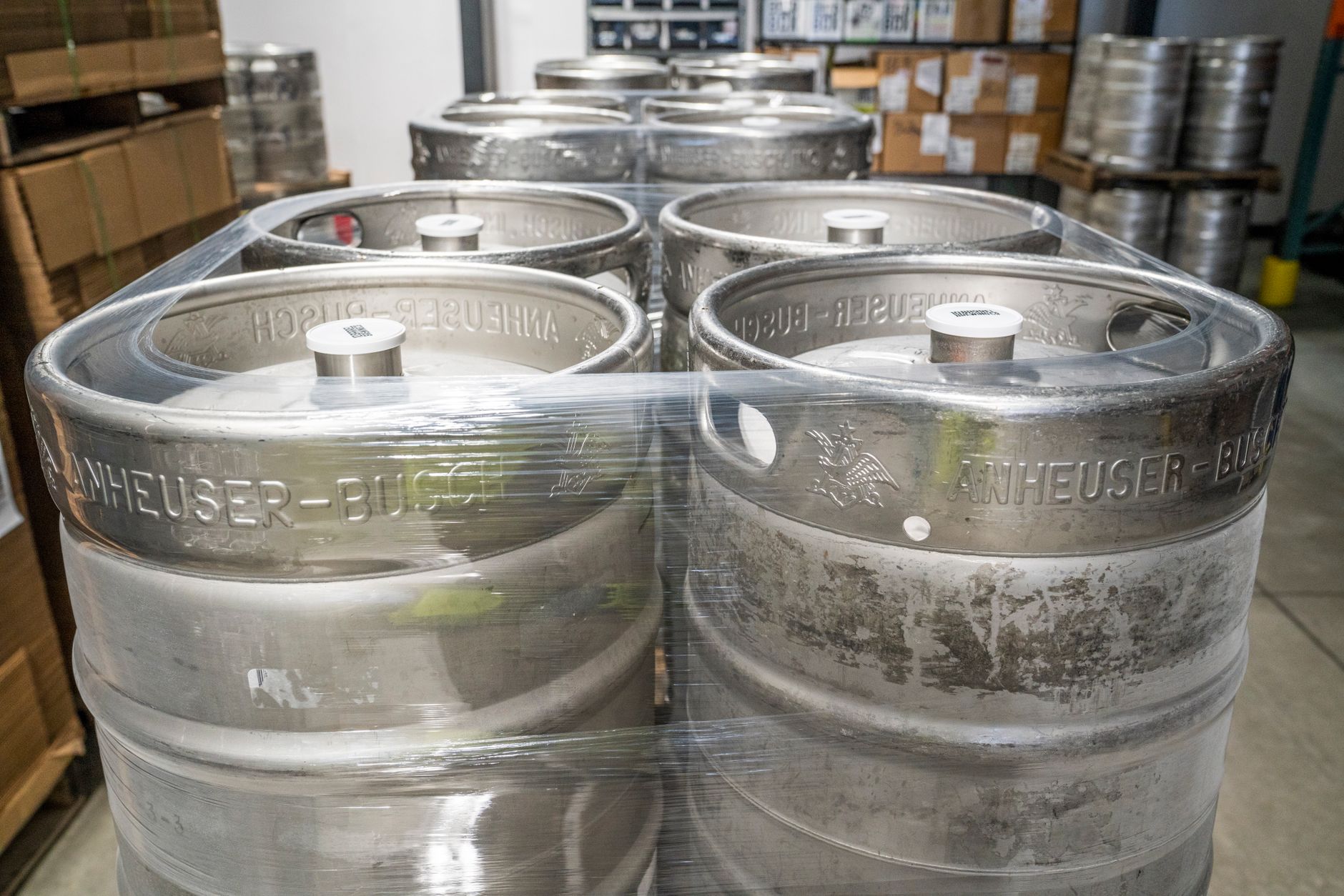
Amazon HPC Liquidation Pallets Explained: What They Are and What's Inside
Amazon HPC liquidation pallets are bulk shipments of health and personal care products, including cosmetics, skincare, hair care, and wellness items, sold by Amazon or licensed liquidators at a fraction of retail value. They typically contain overstock, customer returns, and shelf pulls. Pallets vary widely in condition, contents, and cost per unit.
What Is Inside an Amazon HPC Liquidation Pallet?
HPC stands for Health and Personal Care, one of Amazon's highest-volume return and overstock categories. A single pallet can contain hundreds of individual units. These span skincare, cosmetics, hair care, vitamins, OTC medications, oral care products, and personal hygiene items. The global beauty and personal care products market was valued at USD 552.0 Billion in 2025 and is projected to reach USD 804.3 Billion by 2034, growing at a 4.27% CAGR (imarcgroup.com). That scale explains why Amazon generates enormous HPC liquidation volume every year. Pallet composition depends heavily on the source channel: overstock pallets skew toward new product still in original packaging, while return pallets are almost always mixed condition. Amazon sells HPC liquidation through authorized B2B channels. Buyers encounter everything from factory-sealed serums to opened vitamin bottles with missing capsules in a single lot.
Condition is not uniform. Items can be new, opened, damaged, incomplete, expired, or otherwise unsuitable for resale. This is not an edge case. It is the default reality of return pallets, and any reseller projecting margins without accounting for unsellable units is working from a flawed model. The percentage of truly resellable units on a return pallet varies widely based on grade distribution and the original return reason, which is why understanding condition grades before you bid matters.
How Do Condition Grades Affect What You Receive?
Amazon uses a tiered grading system that buyers must understand before placing a bid. Grade A means factory-sealed, new-in-box, closest to retail shelf condition. Grade B covers open-box or minor cosmetic damage where the product is typically intact and functional. Grade C includes damaged packaging, missing accessories, or incomplete sets. For cosmetics and skincare, Grade C carries additional risk beyond aesthetics. An opened moisturizer or a foundation with a cracked pump may be contaminated, past its stability window, or simply unsellable on any reputable platform. HPC pallets sold as "returns" routinely mix all three grades in a single lot, so a pallet advertised as "Grade B" may still contain a meaningful share of Grade C units. Buyers should request the full grade distribution, not just the headline grade, before committing capital.
A point that most vendor blogs skip: liquidation paperwork does not function as a brand-authorized wholesale invoice. If you plan to list products as new on Amazon, you need a verifiable supply chain document from an authorized distributor. A B-Stock auction receipt does not satisfy Amazon's authenticity requirements for new listings. Attempting to list return-pallet goods as new is a policy violation that can result in account suspension. This distinction separates liquidation buying from wholesale buying, and it has real operational consequences for beauty resellers.
What Is a Liquidation Manifest and Why Does It Matter?
A manifest is a line-item spreadsheet. It lists SKUs, descriptions, quantities, retail prices, and condition grades for every unit on a pallet. Manifested pallets allow buyers to calculate potential resale revenue and margin before committing capital. Unmanifested pallets are sold as mystery lots. They carry higher uncertainty and sometimes lower acquisition cost, but buyers have no way to verify what percentage of the lot is resellable until it arrives. Manifested pallets provide item lists or category breakdowns; unmanifested pallets are a gamble, full stop.
Manifest accuracy is a known pain point in the liquidation industry. At Remex Liquidation, we have found requesting detailed grade breakdowns reduces acquisition risk. Cross-referencing manifest data against current market listings also helps. Discrepancies between listed and actual items are common across all liquidation channels. Cross-referencing manifest retail values against current sold listings on major resale platforms is essential before bidding. If the manifest shows a retail value that does not match current market prices, the acquisition cost has to come down proportionally, or the margin math will not work. Reputable B2B channels provide manifests for most HPC lots, but "manifest provided" is not the same as "manifest accurate."
How Do You Calculate the True Landed Cost of an HPC Liquidation Pallet?
Landed cost equals acquisition price plus freight, plus any sorting, storage, or prep fees. Most buyers focus on the auction hammer price and underestimate everything downstream. Freight alone can swing a deal from profitable to breakeven. For 2026, the national average LTL rate for a standard 1-pallet shipment is $580, with a median of $516 (wearewarp.com). That is not a small line item.
Beyond freight, 3PL handling adds up quickly. Receiving a pallet at a 3PL facility runs $8.75 on average in 2026, and storage costs $19.37 per pallet per month (warehouserepublic.com). Pick and pack fees average $3.21 per order for single-item B2C fulfillment (warehouserepublic.com). Add platform fees from Amazon FBA, eBay, TikTok Shop, or Whatnot, and the per-unit economics shift fast. The correct metric is cost per sellable unit, not cost per total unit received. Divide your full landed cost by only the units you can actually list and sell.
Return pallets also require additional labor to inspect, sort, and relist individual items. That labor cost is real even if it is unpaid owner time. Buyers sourcing from California or Texas warehouses benefit from lower freight costs to Western US markets, which is one structural advantage of working with suppliers that ship from Dallas, TX or Santa Fe Springs, CA.
How Do Amazon HPC Pallets Compare to Other Retail Liquidation Sources?
Not all liquidation HPC pallets carry the same risk profile. Amazon HPC pallets command a premium over generic liquidation because of brand recognition and consumer demand, but that premium does not guarantee product condition. Target liquidation HPC pallets sourced through Target's official B2B auction platform tend to offer more consistent condition grades and manifests. SHEIN and fast-fashion beauty overstock appear in unmanifested mystery lots and carry the highest uncertainty of any major retail source.
Buyers who want new, authentic cosmetic inventory without the condition risk of return pallets often layer in curated wholesale lots alongside liquidation buys. All units are new, in original manufacturer packaging. Volume discounts start at 12 boxes, and orders of 5 or more boxes require an LTL freight quote. This is a lower-risk entry point compared to mixed-condition return pallets, particularly for TikTok Shop beauty inventory and Whatnot live selling where product presentation drives sales. Contact us via WhatsApp at (434) 333-9857 or the contact page to confirm current lot contents and availability.
For sellers scaling up, liquidation pallets and truckloads are also available. Consider a TikTok Shop seller in Atlanta. This tests audience demand for K-beauty serums and sheet masks. The scale-up path looks like this: start with one small lot box to test K-beauty wholesale on your audience, restock consistently as you validate sell-through, then move to pallets and truckloads as volume justifies the capital outlay.
Why Does the HPC Liquidation Category Attract Beauty Resellers?
Health and personal care is one of the top five highest-volume return categories on Amazon, which means liquidation supply is large, consistent, and available year-round. That supply reliability is the foundation of a resale business. HPC items are generally lightweight and compact, keeping per-unit fulfillment costs low compared to electronics or furniture. Live sellers on Whatnot and TikTok benefit from the visual appeal and gift-ability of beauty and personal care products. Skincare and cosmetics perform especially well in live-selling formats because buyers can see the product, hear the pitch, and purchase in real time.
New and overstock HPC lots command significantly higher resale prices than return lots because product integrity is verifiable. Korean beauty brands within the HPC space have demonstrated strong sell-through rates on live-selling platforms due to trend-driven consumer demand, making authentic K-beauty wholesale a natural complement to liquidation sourcing. The risk calculus is straightforward: return pallets offer lower acquisition costs with higher condition uncertainty and potentially significant unsellable rates, while curated wholesale lots like bulk beauty products from verified suppliers trade a slightly higher per-unit cost for predictable condition, authentic provenance, and cleaner margin math. Experienced beauty resellers typically run both in parallel, using liquidation for discovery and volume, and wholesale for consistent, listable inventory.
Frequently Asked Questions
What does HPC stand for in Amazon liquidation pallets?
Are the cosmetics in Amazon HPC liquidation pallets safe to resell?
How much does an Amazon HPC liquidation pallet cost on average?
What is the difference between a manifested and an unmanifested HPC pallet?
Where can I buy new, authentic cosmetics in bulk without the condition risk of return pallets?
Can I start with one box of wholesale cosmetics instead of a full pallet?
How do Amazon HPC liquidation pallets differ from standard customer-return pallets?
What types of products are commonly found in Amazon HPC pallets?
How much do Amazon HPC liquidation pallets typically cost?
What condition are items in Amazon HPC pallets usually in?
Where can I buy legitimate Amazon HPC liquidation pallets?
Sources & References
- LTL Rate Benchmarks 2026: Averages & Cost Per Mile - Warp (opens in a new tab)[industry]
- Average 3PL Costs: 2026 Fee Benchmarks - Warehouse Republic (opens in a new tab)[industry]
- Global Beauty and Personal Care Products Market Statistics - IMARC Group (opens in a new tab)[industry]
- remexliquidation.com (opens in a new tab)[industry]
About the Author
Remex Liquidation
REMEX Liquidation is a B2B wholesale supplier of authentic Korean cosmetics and skincare in small, flexible lots for online and live-selling resellers, plus liquidation pallets and truckloads from major retailers, shipped from warehouses in Dallas, TX and Santa Fe Springs, CA.
Learn more at remexliquidation.com → (opens in a new tab)Related Posts
Scaling From One K-Beauty Box to Full Truckloads: A Growth Roadmap for Beauty Resellers
Most beauty resellers start with one box and wonder how the top sellers got to truckload volume. This roadmap walks through every stage of that journey, from a $600 K-beauty mixed lot to LTL pallets and full truckloads, with concrete benchmarks, manifest strategy, and sourcing guidance at each level.
11 min read
SHEIN Liquidation Pallets: What Resellers Actually Get (And What to Consider First)
SHEIN liquidation pallets contain mixed apparel and beauty overstock, but resellers often face incomplete manifests, variable quality, and high minimum spend before seeing profit. This guide breaks down what you actually get, how to calculate landed costs, and why some beauty resellers start with small authenticated lots before scaling to pallets.
12 min read
Truckload Liquidation: What to Know Before Buying a Full Load
Buying a liquidation truckload can unlock serious wholesale margins, but the wrong load can sink your cash flow fast. This guide covers manifests, landed costs, product categories, and the smartest entry path for beauty resellers scaling from small lots to full truckloads.
12 min read